Let’s get things straight – there is such as thing as Negative SEO. It exists. It works (on some websites). It happens. And it’s been happening more since the latest Penguin Update. Now, Google has just stated the ‘solution’ against Negative SEO.
Disavowing Links
Sounds like a marriage gone wrong, right? Disavowing links is simply telling Google that the incoming link is not wanted. It’s either a bad link, a spam link, a link with the intention of bringing your site down, etc…
The soon-to-come disavow tool is also a reinforcement to the fact that Negative SEO is becoming a bigger problem after the Penguin Update.
How do you know which Links to Disavow?
Well first of all, you need to know your backlinks. Use a Backlink Checking tool to see which links point to your website and where it comes from. I have compiled a list of Backlink Checking Tools for your convenience and perusal.
A good link will come from a website which linked to you because they have found value in you. This link will most probably have a good, relevant topic as its host content and will most probably have a relevant anchor text. So what links should you watch out for?
- Watch out for increasing number of links that have exact-match anchor text.
- Watch out for increasing number of links that come from webpages that have nothing to do with you.
- Watch out for increasing number of links that come from low-quality webpages.
Track your backlinks and examine if any of these things are present. If they are, it’s time to report it to Google through this form. I’m not so sure if you need to paste each and every URL there and tell Google that those are not yours. Perhaps Google has been receiving tons of link disavowment requests through this form. Thus they thought of coming up with a link disavowment tool.
Link Naturality
A Natural Link profile should consist of raw URLs such as http://seo-hacker.org or www.seo-hacker.org. It also consists of a lot of brand links. Without much of these two, it’s quite easy to conclude that there’s linkbuilding going on. Take a look at this picture (From Cognitive SEO’s Backlink Checking Tool)
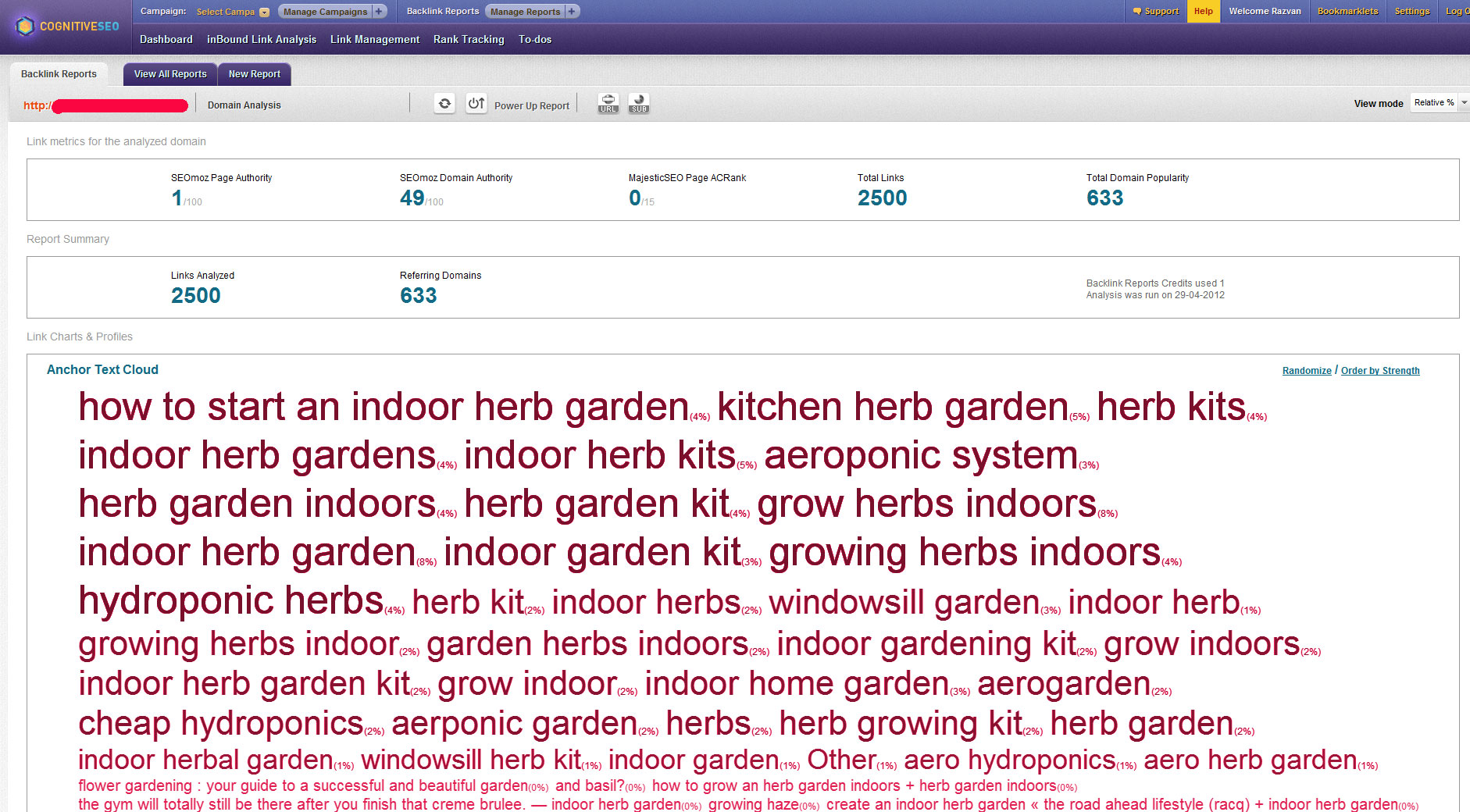
There are tons of exact match anchor text and almost no raw URLs nor brand Links. I won’t be surprised if this site’s now gone from the SERPs. A more natural link profile would look like this:
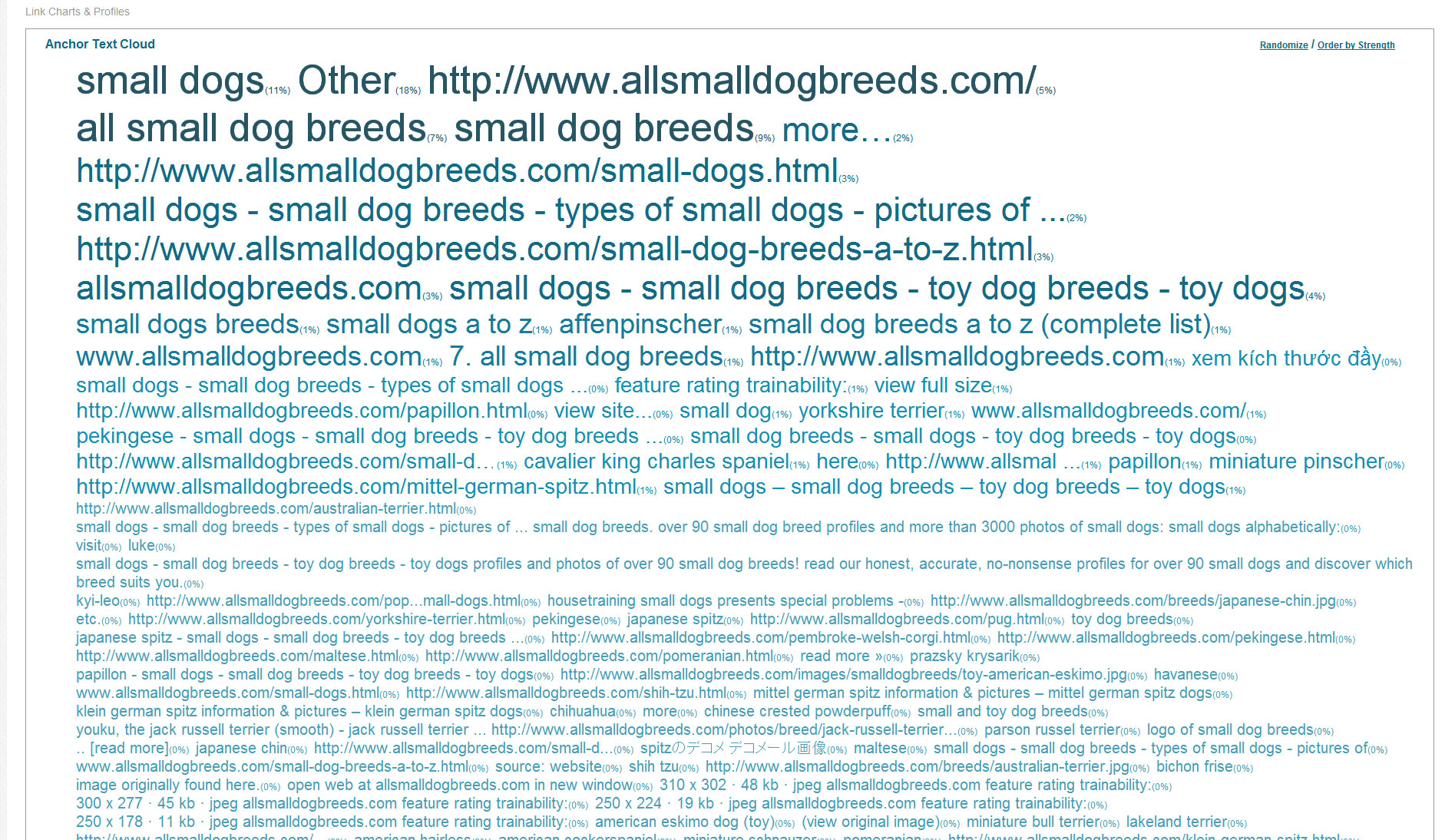
Does your link profile look natural? If it doesn’t, well, I guess that’s another use of the up-coming link disavowment tool.
Anti-Negative SEO?
It’s been said that this link disavowment tool is to combat Negative SEO. If your website reputation isn’t as high and mighty as the big brands (like SEOMoz, Coca-Cola, Apple, etc…) then you’re always a susceptible target for negative SEO. Knowing this disavowment tool is under development should be a sigh of relief for SEO specialists.
We don’t want the SEO industry adopting the crab mentality with negative SEO. Do we?


A very good guide. In my opinion, we should also not resort to negative SEO if we want to rank high in search engine lists. It is just an insult to the people who are doing their part in keeping their sites at the top of the list as well as to Google, who is trying to clean out those spammers from the net.
First of all i like your article. And i understand the philosophy behind it. But is Google is going to work like that, someone who really hates me can do some harm to my website/business.
I am not that technical and run some small WP sites. But if someone really want’s to do harm how can i protect my self or if the harm is done delete the links that person created?
scary stuff!!!
Keep up the good work
I’ve been surfing the Web about this whole brouhaha called the Penguin update and so far, yours is the most understandable. I now have a better understanding of the Penguin update and I just learned about negative SEO, which is a new concept to me, really. I heard that many companies who are in the top rank in search engines are not even on page 2 any more.
Proof? Cutts did say Negative SEO is possible but very difficult. Like I said before, there is no documented proof. If there was, you would have cited it already, right? Negative SEO is possible (like the existence of the Yeti) but you can’t prove it (like the yeti)
Hi Mark,
There has been a case study done for negative SEO. You can check it out through this link: trafficplanet.com/topic/2369-case-study-negative-seo-results/
I totally agree with you saying that Negative SEO is possible but very difficult. It is possible nontheless – in fact, this case study quite independently proves so.
While I agree that this is a popular case study, I actually have worked with Dan Thies in the past and he has maintained that his site’s ranking drop was not due to NSEO, but redesugn and hosting issues. Rand Fishkin himself talked about this case study in SEOMoz and nobody has any definitive proof about it.
http://www.seomoz.org/blog/negative-seo-myths-realities-and-precautions-whiteboard-friday
The possibilities angle is safe, but like I said: there may be a yeti out there but nobody can prove it. So unless proven, I would agree to disagree with you on Negative SEO.
What do you think does backlinks from p0rn websites hurt seo or help seo whatsoever the pagerank might be?
I think if you have more bad links than good ones, your SEO can be negatively affected. Otherwise, it’s not a concern.
Removing links from spam sites, specially porn and viagra sites do help a lot (tried and tested myself). Also, you should be aware of the shared hosting (if your using one) to be more vigilant with the other hosted sites on same IP as you can be a neighbor of these sites.
Hey Paul,
Good insight. Let’s make sure to keep those ‘negative sites’ away from ours, shall we?
Sean, I agree with you that negative SEO is only a concern for websites that don’t already have a fair number of high quality backlinks pointing to them. That’s why webmasters should really focus on getting a lot of natural, high quality backlinks when they first launch a website. Lots of good content teamed with several high quality backlinks is a great way to defend against negative SEO!