Everything You Should Know About E-E-A-T

Experience, Expertise, Authoritativeness, and Trustworthiness, better known as E-E-A-T, has become one of the most important concepts to understand when creating content for Google Search.
If E-E-A-T sounds familiar, that is because it used to be called E-A-T, which stood for Expertise, Authoritativeness, and Trustworthiness.
In December 2022, Google added another E: Experience. The idea is simple. Sometimes, knowing a topic is not enough. Google also wants to understand whether the person creating the content has actually experienced what they are talking about.
Think about a product review. Would you rather read a review written by someone who actually used the product or one written by someone who simply summarized its specifications?
That distinction is at the heart of the additional E.
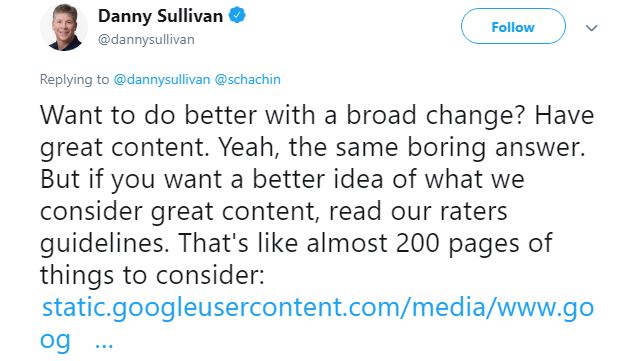
But there is also one important misconception I want to clear up early:
E-E-A-T itself is not a specific Google ranking factor.
Google says its ranking systems use a mix of different factors that can identify content demonstrating strong E-E-A-T. So there is no E-E-A-T score that you can improve from 60 to 80 and suddenly expect your rankings to increase.
What you can do is build the qualities that make your content, authors, and website more trustworthy.
And today, that goes far beyond simply adding an author bio.
In this article, I’ll be taking a deep dive into E-E-A-T to better understand what really does Google mean by great content and how do they judge it and a bit of historical background to how it all started.
What Does E-E-A-T Mean?
E-E-A-T stands for:
- Experience
- Expertise
- Authoritativeness
- Trustworthiness
All four contribute to how Google evaluates the quality of content, but Google makes one thing particularly clear in its Search Quality Rater Guidelines:
Trust is the most important part of E-E-A-T.
Experience, expertise, and authoritativeness essentially help establish whether a person, page, or website deserves that trust.
Let’s break each one down.
Experience
Experience refers to whether the content creator has first-hand or real-life experience with the topic.
This is probably the biggest difference between the old E-A-T framework and what we have today.
For example:
Someone reviewing a hotel after actually staying there can provide details that someone compiling information from other websites probably cannot.
Someone reviewing SEO software after using it on real campaigns can explain where the tool works well, where it falls short, and what kind of user would benefit from it.
Someone explaining how they recovered from a Google algorithm update can show what happened to their traffic, what they changed, and what happened afterward.
These are things that come from experience.
Google’s Quality Rater Guidelines specifically ask raters to consider whether the creator has the necessary first-hand or life experience for the subject.
That does not mean every article suddenly needs a personal story.
The amount of experience that matters depends on the topic.
A product review benefits heavily from first-hand experience. A definition of a technical concept may depend much more on expertise and accurate sourcing.
Expertise
Expertise refers to whether the person creating the content has the knowledge or skill necessary for the subject.
This becomes especially important when users rely on the information to make important decisions.
If someone is explaining an advanced SEO problem, for example, I would want to know whether that person actually understands SEO beyond what they have read from the first few Google results.
The same becomes much more important when dealing with health, legal, financial, or safety-related information.
Google describes these as Your Money or Your Life, or YMYL, topics.
For certain YMYL subjects, first-hand experience can still be useful. Someone can talk about their personal experience recovering from an illness, for example.
But giving medical advice about how that illness should be treated is another matter entirely. Google specifically distinguishes between situations where personal experience is useful and situations where information should come from an appropriate expert.
Expertise should match the purpose of the content.
Authoritativeness
Authoritativeness is about whether the creator or website is recognized as a go-to source for a particular topic.
This is where reputation starts becoming important.
If other trustworthy websites repeatedly reference your research, quote your experts, mention your brand, link to your resources, and recognize you within an industry, those signals help establish your authority.
Google’s Quality Rater Guidelines describe authoritativeness in a similar way: raters are asked to consider whether the creator or website is known as a go-to source for the topic.
This is one reason why authority cannot be built entirely on your own website.
You can say that you are the best SEO agency in the world as many times as you want.
That does not necessarily make you authoritative.
What other people and organizations say about you matters too.
Trustworthiness
Trust sits in the middle of everything.
Google defines trust around whether a page is accurate, honest, safe, and reliable.
And this applies differently depending on what your website does.
An ecommerce website needs secure transactions, accurate product information, transparent policies, and reliable customer service.
A product review should represent the product honestly rather than being written simply to generate affiliate commissions.
A financial article needs accurate information that will not put someone’s financial security at risk.
An SEO article should not make claims about Google’s algorithm that cannot actually be supported.
This is why I think trust is a useful way to think about E-E-A-T as a whole.
Ask yourself:
Why should someone trust this page?
If you cannot give them a convincing answer, then there is probably something you need to improve.
The History Behind E-E-A-T
Google+ AuthorRank
Do you remember AuthorRank? If you’ve been doing SEO since 2012, then you’ve probably heard of it.
Back in 2013, I wrote an article on AuthorRank. It was the time when lots of false and spam content was circulating around the internet and Google had to take steps to better identify real content from real authors. At the same time, Google also released Google Authorship where the name and icon of the author appear along in the search results.

AuthorRank pulled up data of webmasters from their Google+ profile. Before, you can add a short authorship markup rel=”author” where you can link your Google+ profile to the content you publish on your website. It was a popular on site optimization factor before. But as you know, Google+ has shutdown but if you are interested in checking this out, you could take the time machine and read this post on Google Authorship Markup in 2012.
So why did I bring this up? In my opinion, AuthorRank is one of Google’s stepping stone in coming up with E-A-T. It touches on the importance of having a good online reputation, far different from technical SEO factors like links and meta tags. At least we know that E-A-T is a long time coming. Since the boom of AuthorRank in 2012, Google has been trying to find a better correlation between good content and a good author.
There were different ways to measure AuthorRank before. One of which was on how many +1 you received in Google+ and how many people add you in their Circles. Social media presence was also a factor and of course, backlinks.
Google ended their 3-year experiment with Authorship in 2014 but many said that AuthorRank is still alive.
Google Medic Update
In early August 2018, just a month after Google announced the revised version of the QRG, a huge core algorithm update was released. Many websites reported that they were hit hard. Most of those are health/medical websites hence the name Google Medic Update.
Panic was in the air. Webmasters here and there were asking “how can we recover?”. But apparently, there was no “fix”. Then, E-A-T took the spotlight.
Marie Haynes, an expert Google Algorithm Changes and E-A-T, pointed out the qualities of the website that were hit does not adhere to E-A-T standards. In her example, an author named Bridget Montgomery wrote a review of Top 10 Glucose Meters. However, when you go to the author’s profile, there were no information that the author is an expert in the medical field, just a list of articles she published.

Even though many websites were hit, Marie also pointed out that there were websites in the same niche that had these qualities have gained:
- Clear identity of authors of the articles
- Main purpose of website content is to inform not to sell
- Lots of signs of authority such as comments and reviews
Because of correlations such as these, people started theorizing that E-A-T is a ranking factor. Many counted out this theory, however, in another post by Marie Haynes, she pointed out that a whitepaper that Google published in February 2019 on their fight against disinformation confirms that E-A-T is indeed a ranking factor.
Google Quality Raters Guidelines
In 2015, Google released the full version of the Quality Raters Guidelines or QRG that contain the criteria in evaluating a website hence called the “Google Quality Raters Guidelines”. It was revised in June 2018 and was last updated on May 2019.
To help evaluate each website on its index, Google contracted more than 10,000 employees to evaluate pages that appear in the search results especially those in the top pages. They are called the “Quality Raters”.
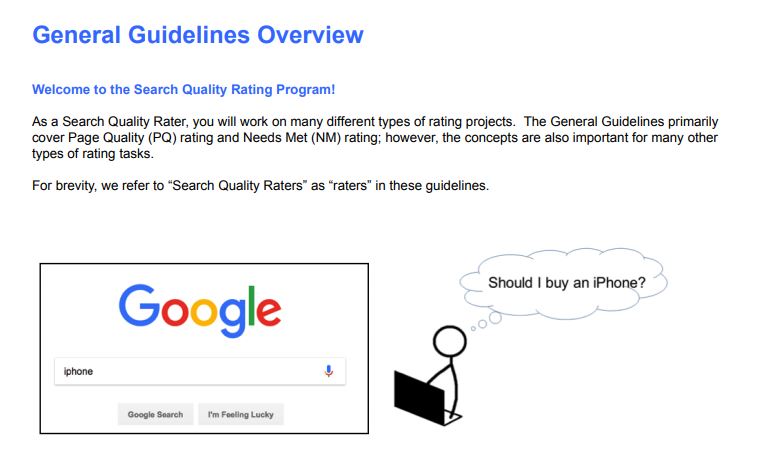
Quality Raters cannot directly affect a website’s rankings. When a page is given a low-quality score, it does not lose all of its rankings and traffic overnight. However, the data from Quality Raters are used for further improvements in Google’s search algorithm.
The QRG taught Quality Raters on the factors they need to consider when judging a page’s Page Quality (PQ). It talks about reputation, quality of a page’s main content, samples of low-quality pages, and of course, the E-A-T.
In section 3.2, the QRG first mentioned E-A-T. It said that websites or pages the don’t have any purpose or benefits for users should receive the lowest Page Quality (PQ) rating. However, for those websites or pages that provide value to users, the amount of E-A-T is important and Quality Raters should consider the following:
- The expertise of the creator of the Main Content (MC)
- The authoritativeness of the creator of the MC, the MC itself, and the website
- The trustworthiness of the creator of the MC, the MC itself, and the website
How E-A-T Became E-E-A-T
The idea behind E-E-A-T is not completely new.
Google has spent years trying to improve its ability to identify high-quality, reliable information.
E-A-T became particularly well known in the SEO industry after Google’s 2018 broad core update, commonly referred to by SEOs as the “Medic Update.” Sites in health and other YMYL categories received a lot of attention following the update, leading SEOs to study Google’s Search Quality Rater Guidelines much more closely.
By 2019, Google was openly directing website owners affected by core updates toward its guidance on E-A-T and the Quality Rater Guidelines.
Then, in December 2022, Google officially expanded E-A-T into E-E-A-T by introducing Experience.
That change is important because the web had also changed.
Anyone can summarize information that already exists online.
What becomes much harder to replicate is genuine experience, original research, real expertise, unique data, informed opinions, and insights earned from actually doing the work.
Those are also the things that tend to make content more useful to readers.
Is E-E-A-T a Google Ranking Factor?
This question has caused a lot of confusion over the years.
Google’s current explanation is straightforward:
E-E-A-T is not one specific ranking factor.
Google’s automated systems use many different factors and signals. Some of those can help its systems identify content that demonstrates qualities associated with experience, expertise, authoritativeness, and trustworthiness.
That difference is important.
There is no known E-E-A-T score.
There is no E-E-A-T meta tag.
There is no piece of schema markup you can add that tells Google, “Trust me, I am an expert.”
E-E-A-T is better understood as the outcome of doing many things correctly.
How to Improve Your Website’s E-E-A-T
So if you cannot technically “optimize” an E-E-A-T score, what can you actually do?
You build the evidence that users and search engines would expect from a trustworthy source.
Here are some of the areas I would focus on.
Show First-Hand Experience
Do not create another version of an article that already exists on 100 other websites.
Add something that could only come from actually doing the work.
Depending on the topic, that could include:
- Original screenshots
- Real examples
- Case studies
- Tests and experiments
- Original photographs
- Results from using a product
- Lessons learned from a project
- Personal observations
- Original data
- Pros and cons based on actual use
This does not mean forcing personal anecdotes into every paragraph.
The goal is to demonstrate that there is actual experience behind the content where experience matters.
Google’s current Quality Rater Guidelines specifically recognize first-hand experience as valuable across many types of content.
Make It Clear Who Created the Content
One of Google’s recommendations for people-first content is to make the “Who” behind the content clear.
Ask:
Who wrote this?
Why should I listen to them?
What experience or expertise do they have?
Google encourages websites to provide accurate authorship information and bylines when readers would reasonably expect them.
Your author pages can include relevant information such as:
- Professional experience
- Areas of expertise
- Qualifications where relevant
- Industry experience
- Other publications
- Professional profiles
- Notable projects or research
But do not add credentials purely for decoration.
The information should actually help the reader understand why that author is qualified to discuss the topic.
Back Up Your Claims
Trustworthy content should make it easy for readers to verify important claims.
When discussing statistics, research, laws, scientific information, Google’s policies, or industry data, cite reliable primary sources whenever possible.
There is a huge difference between saying:
“Google prioritizes websites that publish every day.”
and:
“Google says there is no preferred publishing frequency.”
One is an unsupported SEO claim.
The other can be verified.
This is particularly important when writing about fast-changing subjects where information can become outdated quickly.
Build Your Reputation Outside Your Website
Authority is not something you can manufacture entirely through on-page optimization.
Your website should become part of the wider conversation in your industry.
That can happen through:
- Editorial backlinks
- Brand mentions
- Expert quotes
- Interviews
- Digital PR
- Industry publications
- Original research
- Conference appearances
- Partnerships
- Community participation
Links are still useful here, but I would not look at backlinks in isolation.
A strong brand is often talked about even when there is no hyperlink attached to its name.
Being consistently referenced by reputable sources can help establish that your company or authors are recognized within the industry.
Earn Legitimate Reviews
If customers interact directly with your business, reviews can provide another important layer of trust.
Google’s Quality Rater Guidelines instruct raters to research the reputation of both websites and content creators rather than relying only on what a company says about itself.
That means your reputation outside your website matters.
Encourage genuine customers to leave honest reviews on platforms relevant to your industry.
Do not manufacture them.
A suspicious page filled with perfect reviews is not exactly the best way to establish trust.
Make Your Business Transparent
Users should be able to understand who is behind a website.
Depending on your business, that may mean providing:
- A clear About page
- Contact information
- Customer support information
- Business details
- Editorial policies
- Privacy policies
- Refund or return policies
- Terms and conditions
- Corrections policies
- Information about how reviews or recommendations are produced
The more responsibility your website asks users to place in it, the more important transparency becomes.
Keep Important Content Accurate and Updated
E-E-A-T is not only about who wrote the article.
The article itself still has to be good.
Outdated statistics, broken references, old screenshots, discontinued products, inaccurate recommendations, and obsolete advice can all undermine trust.
This is particularly important for topics where information changes frequently.
An article written by an expert can still become untrustworthy if the information in it is five years out of date.
Content maintenance should therefore be part of your SEO strategy, not something you only do when rankings start declining.
Pay Extra Attention to YMYL Content
Google places greater importance on strong E-E-A-T for topics that could significantly affect someone’s health, financial stability, safety, or the welfare of society.
If you publish YMYL content, the standard is naturally higher.
That might mean having:
- Qualified writers
- Expert reviewers
- Reliable primary sources
- Clear publication and update dates
- Transparent editorial processes
- Strong fact-checking
- Appropriate disclaimers where necessary
There is also an important distinction between experience and expertise.
Someone can legitimately describe what it felt like to undergo a medical procedure.
That does not automatically qualify them to explain which medical treatment another person should choose.
Google’s current guidelines make exactly this distinction when evaluating YMYL content.
What About AI-Generated Content and E-E-A-T?
With AI tools now being used throughout content creation, another question comes up:
Can AI-generated content demonstrate E-E-A-T?
Google’s position is focused primarily on the quality of the content rather than simply how it was produced. Its systems aim to reward original, useful content demonstrating qualities associated with E-E-A-T regardless of whether AI was involved in the production process.
The problem is not automatically that AI was used.
The problem is publishing generic content that adds nothing new.
If you’re using AI to create articles by simply summarizing information that already exists across the search results, where is the experience?
Where is the expertise?
Why should someone consider your page authoritative?
And most importantly, why should they trust it?
AI can assist the content creation process, but it does not replace the need for original thinking, factual accuracy, expert review, first-hand knowledge, and accountability.
Does E-E-A-T Matter for AI Search?
Search itself is also changing.
Google now has experiences such as AI Overviews and AI Mode, where generative AI can synthesize information from multiple sources.
But that does not mean the fundamentals of SEO suddenly disappeared.
Google says that its existing SEO best practices continue to apply to its generative AI search experiences because those features are grounded in Google’s Search ranking and quality systems.
That makes the principles behind E-E-A-T just as relevant.
If search engines need reliable sources from which to retrieve, understand, and synthesize information, giving them accurate, original, well-supported content from identifiable and trustworthy creators becomes even more important.
There is no special “E-E-A-T optimization for AI Mode” that you need to implement.
The fundamentals still apply.
Create something worth finding, trusting, and referencing.
Key Takeaway
E-E-A-T has evolved considerably since SEOs first started talking about E-A-T.
It is no longer enough to think about expertise, authority, and trust alone.
Google has explicitly added Experience, recognizing that first-hand knowledge can make content substantially more useful depending on what someone is searching for.
But remember that E-E-A-T is not a score you can check and it is not one specific ranking factor.
It is a framework for understanding what makes content and its creator trustworthy.
If I had to simplify the entire concept into a few questions, I would ask:
- Did someone with the right experience or expertise create this?
- Does the content provide something genuinely useful or original?
- Can important claims be verified?
- Do other people recognize this person or website as a credible source?
- Is the website transparent about who is behind it?
- Is the information accurate, safe, and reliable?
- Most importantly, why should the reader trust this page?
If you can answer those questions well, then you are already thinking about E-E-A-T the right way.
