What is Link Building?

Was teaching about Link building this week to a new batch of linkbuilders and I figured I should make an About Link Building post for any new linkbuilders out there who wants a one-stop resource to guide them. I’ll be focusing on the different linkbuilding factors, linkbuilding methods and linkbuilding results.
Linkbuilding Factors
There are certain things that I look for when checking a link out – and you should too. Here are the factors that count when you’re looking for links
PageRank
This is a metric used by Google to rate the quality and quantity of backlinks of a specific page. When you’re checking a link out, make sure to know what the PageRank of that webpage where your link is coming from. The higher the PageRank, the more PageRank juice it can give you.
Relevance
Read the content of the webpage and you’ll see what it’s about. If you’re trying to get a link from that page, make sure that the content surrounding your desired link is relevant to the page you’re getting it for. If the page is about dog training and you’re going to point it to a plumbing website, things just won’t work out – and your link will most probably get minimal value.
 Quality of Articles
There is what we now call “thin content” – which rose to popularity since the Google Panda update. Consequently, there is also what we call “thick content”. The difference between the two is not the quantity of words as if it’s a book. The difference is the quality – which can be enumerated down to at least three nitty-gritty factors:
Usefulness: Are people really getting something valuable out of your content? Are they linking to it because it’s great?
Time on site: Are people really reading the content?Are they bouncing off?
Social Engagement: Are people Retweeting/Liking/+1’ing (if there is such a term) the content?
Anchor Text
Are you looking for anchor text with exact match? Or are you already going to settle for a relevant one? Remember, Anchor text is the biggest signal to a search engine about what the link is about. Having the right anchor text still proves to be one of the best factors around when it comes to links.
Anchor Title
Whenever you mouse-over a link, the anchor title appears in the form of a tool-tip text. Usually, this is left blank. An anchor title helps the search engines too, in regards with what the link is about.
Dofollow/Nofollow
You can check if a link is a nofollow link by using plugins such as SEO Toolbar (for Firefox users) and SEOQuake (for Chrome users). A dofollow links is ALWAYS better because it passes on PageRank which helps your rankings directly. A nofollow link, on the other hand, influences your TrustRank – which does not directly help you but has its SEO perks in some other way.
Number of Outbound Links
If the webpage has too many outbound links inside it, then you’ll probably be just another face in the crowd. The PageRank juice being passed on to you has been minimized by all the other links going out of the page. You should be mindful of the number of outbound links (AKA external links) when looking for webpages/websites to get a link from.
Link Placement
Where your link is placed definitely affects the link. The Click-through-rate (CTR) is almost always higher when a link is in the header or in the upper body of the content – which increases its value as a link. I have a resource about link placements and where you should put your links which you should check out.
Click-through-rate (CTR)
The number of people clicking your link tells Google that your link probably has good relevance, proper anchor text, and perfect placement. High Click-through-rate (CTR) links passes more PageRank juice because of its value to the end-users (if you didn’t know, end-users mean human beings).
Traffic
Is the website drawing in a good amount of traffic? The link that you’re going to get can only have so much visitors as the page it’s on. Knowing if the site has a good amount of traffic can influence your link’s Click-through-rate (CTR).
 Linkbuilding Methods

Knowing these factors, let’s move on on how to apply them and what the different link building methods are. There are basically two kinds of methods/approach to linkbuilding: Artificial and Organic
Artificial/Manipulative
These methods deal with processes that can instantly get you links without having to go through much or any human interaction. An artificial linkbuilding approach can fetch you links almost anytime you want it.
Blog Commenting
I think this is the most common way to build links artificially. There are millions and millions of successful blogs out there with millions of specific niches. Some of those blogs are dofollow, while most of them are nofollow. Leaving a comment in a blog should be a mutual act – the blog owner benefits because of a direct interaction / user engagement that occurred, and the commenter gets a link and some recognition. Unfortunately, it’s no longer the case for most people.
Blog commenting is a simple act of leaving your name, email address (usually for Gravatar purposes), and website to leave a ‘Sean was Here!’ kind of footprint – and getting a link to the website you specified for the blog owner to check out. Most SEOs however, use blog commenting for the website backlink alone.
Directory Listing
This used to be the popular way of getting more visitors. I would compare it to Yellow Pages (which I think it was modeled after) in the offline world. Most directories give out links like no tomorrow. If you’re a website and they have a category for you, you get a link as soon as you sign up. Again, not all directories are like this – but most of them are. There are very few directories left still hold good reputation with the search engines.
Some people still swear that they get rankings through directory listing but I don’t quite believe it. I once read that directories are now considered link farms – and it makes sense considering how directories have no real content except for lots and lots of links and their brief descriptions.
 Paid Advertising / Paid Links
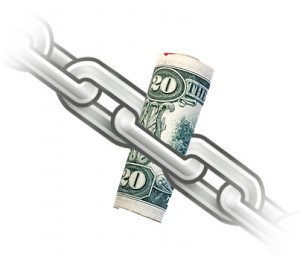
I know you’ve been hearing a lot of ‘don’t buy links because it’s bad’ warnings. They’re all true – if you’re good enough not to get caught. Buying links may well be the best way for you to achieve a better ranking if you invest your money in the right websites to buy those links from.
Forum Posting
Putting your link in your forum sig (signature) is one of the most abused techniques that SEO specialists use in getting backlinks. It’s an instant win for you – especially if you have a lot of posts in different topics and pages and those posts catch your sig link.
Creating other blogs / Web 2.0 sites
There are so many different blogsites and web 2.0 sites in the menu to get backlinks from. There’s Typepad, Blogger, WordPress.com, Posterous, Squidoo, Delicious, Digg, Tumblr, Stumbleupon, etcetera… Creating an account in these web 2.0 sites is easy and simple.
Having an account means you have your own page – either it’s a profile page, a blog page/pages, a favorites page, bookmarks page, whatever – which means you have full control of that account. Consequently, you can put in any amount of links you want with any assigned anchor text to it as you go. Creating these sites and then getting links from them is a way of getting a link anytime without having the need to interact with any human being at all.
Link Exchange / Reciprocal Linking
Dear sir/mam,
“I saw your website and I really liked it and I have websites that I can link to you if you will place a link from http://blablah.com in your homepage.”
Ever seen one of these? I hate ’em. They are impersonal spam emails that annoy my every day. Most of the time, what these people are trying to achieve is a one-way link from you to their website which they want to rank while giving you a one-way link from a crap website that they own. Of course, that’s not always the case.
Some reciprocal links work. You just have to trust the people who are giving ’em to you that they wouldn’t put away your links after some time. I’m sure you also know that reciprocal links hold less value than one-way links.
Article Submission
Before the Google Panda update, Article submission sites / Article hubs were one of the best ways to publish an article and instantly make it rank – because of the PageRank and authority of these article hubs. Some examples of article hubs are e-zine articles, mahalo, marketingsource, articlegeek, etcetera…
Submit your articles with the link you want inside, wait for the editors to publish it – and voila! Instant link. This is also the reason why Google Panda update heavily penalized article hubs – because people were submitting thin content just to get links. Which means that the quality of the content inside article submission websites went from good, to bad, to worse, to penalized.
Organic / Natural
This link building approach deals with human interaction. Of course, the process of getting a link from an organic linkbuilding method is much harder and takes more time and investment. It also produces results that far outweigh the value of links from artificial linkbuilding methods.
Guest Posting
This is perhaps the most common organic way to build backlinks to your website. You study a blog owner and his blog, approach him, do a little ego-boost to ease out any rough edges, then ask if you could contribute to his blog (of course, it’s understood that you’re doing it for some link love). Guest posting is not easy in most cases. There are three steps you need to undergo:
Prospecting – This is where you apply all the stuff you learned about how to look at links and what factors matter.
Contacting the webmaster/blogowner – This is where you’ll be asking permission if you can be a guest author in his blog.
Writing your entry – And you have to make it good enough for the blog owner to eat it all up and hit the publish button. No blogger wants a guest post that’s less than great.
Linkbaiting
Definitely my favorite organic linkbuilding method. Linkbaiting, for me, gets the best links with the least effort – it also has the best ROI in my opinion. Creating great content with great ideas, research and hard work, hitting the publish button, doing a little outbound marketing to spread the word, then waiting for the people to come in and love you. Consequently, you get links in the process.
I’m not saying linkbaiting is easy. In fact, most linkbaits don’t work at all – because of a lack somewhere. Either in marketing, in the content, in research, in design, or what have you. Organic linkbuilding methods take time, relationship, hard work and commitment to get through.
Here’s a great resource on Linkbaiting.
 Broken Linkbuilding
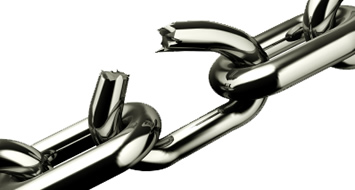
This makes the organic linkbuilding method list. Broken linkbuilding is the process of finding broken outbound links in a website. Broken links damage the website’s reputation to visitors and readers because, well, it’s broken.
Knowing this, you can help the webmaster fix it by telling them that they have a broken link. You can further ‘help’ the webmaster by suggesting working links which he can replace them with. Of course, you should be wise enough to put a link to you as you suggest these links to the webmaster. Just make sure that the resource you have in your website is relevant enough to replace the broken link’s resource. There are four steps to broken linkbuilding:
Prospecting – Looking out for websites that are still live (meaning the webmaster still maintains it somehow) and are relevant to your niche.
Crawling / Checking – Trying to weed out if there are any broken links in that website by using Xenu or Screaming Frog.
Creating content – Re-creating the lost content that the broken link used to point out to. Of course, you should place the content in your website.
Contacting the webmaster – Shooting out an email to the webmaster about his broken link problem and how you want to help him out by suggesting other relevant links that work.
Linkbuilding Results
You can link out more!
Of course, having more PageRank juice coz of links coming in to you means you can link out more and it will hurt much less – especially if you’re linking out to relevant sources. Linking out also increases your participation in the community you’re in – therefore affecting your reputation as an unselfish brand.
 Higher PageRank
Consequently, having more quality backlinks in your website would result to a higher PageRank as this is the main metric used to measure the quality and quantity of such.
More Traffic
Having more links SHOULD also result to an increase in traffic. It’s a no-brainer that if your links are visible to a lot of relevant websites, the chances of people clicking ’em and landing in your site is inevitable.
Contributes to Brand Marketing
Of course, if people who are surfing around your niche will keep on encountering your links in other blogs or websites, your brand will stick to their memory. Having good, quality backlinks contributes to your brand marketing.
Improves Inbound Marketing

People will start to directly type in your brand in the search box once your brand is stuck in their heads. Inbound marketing starts when people start to really specifically look for your brand. Now that you have links all over your niche, inbound marketing will inevitably improve.
Improves chances of higher SERP rankings
More Google PageRank means that you will have much better chances of ranking for certain keywords you are targeting.
 Faster SE Spider Crawlability and indexation
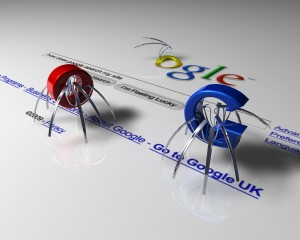
You know that search spiders follow links to crawl and index a website don’t you? When you have lots of backlinks in different blogs, you get indexed in a more consistent basis – because when it’s time to crawl and index those sites, you will also be crawled and indexed too!
Increase in Authority
Getting your brand out there with the notion that you create great content and that the popular blogs around your niche recognizes you and links out to you definitely increases your authority. Whatever you say or do is now looked higher upon by people following any of those blogs where your links are. Ain’t that great?
Increased TrustRank
Even nofollow links pass on TrustRank. This is a metric that is not really visible – but it exists. Consequently, having more links point to you, means those websites trust you enough to direct their precious traffic to your site.
More Contacts / Relationships in your Niche
This is perhaps one of the best results of good linkbuilding. You get to know people personally in your niche. You get to email them, tweet them, add them up in Facebook or Google+ and share your knowledge with each other. Linkbuilding SHOULD be about building relationships (at least that’s what Google is trying to do).
Helps other People
The end-goal of proper linkbuilding is to help people. Help them find your great content. Help them point out to a great resource. Help them know and learn things they’ve never encountered before. Help them make connections. Help their lives to improve and attain world peace.
Like this entry? Show us some love! Give us a +1 and add SEO Hacker on Google Plus! We’ll surely add you up too!
